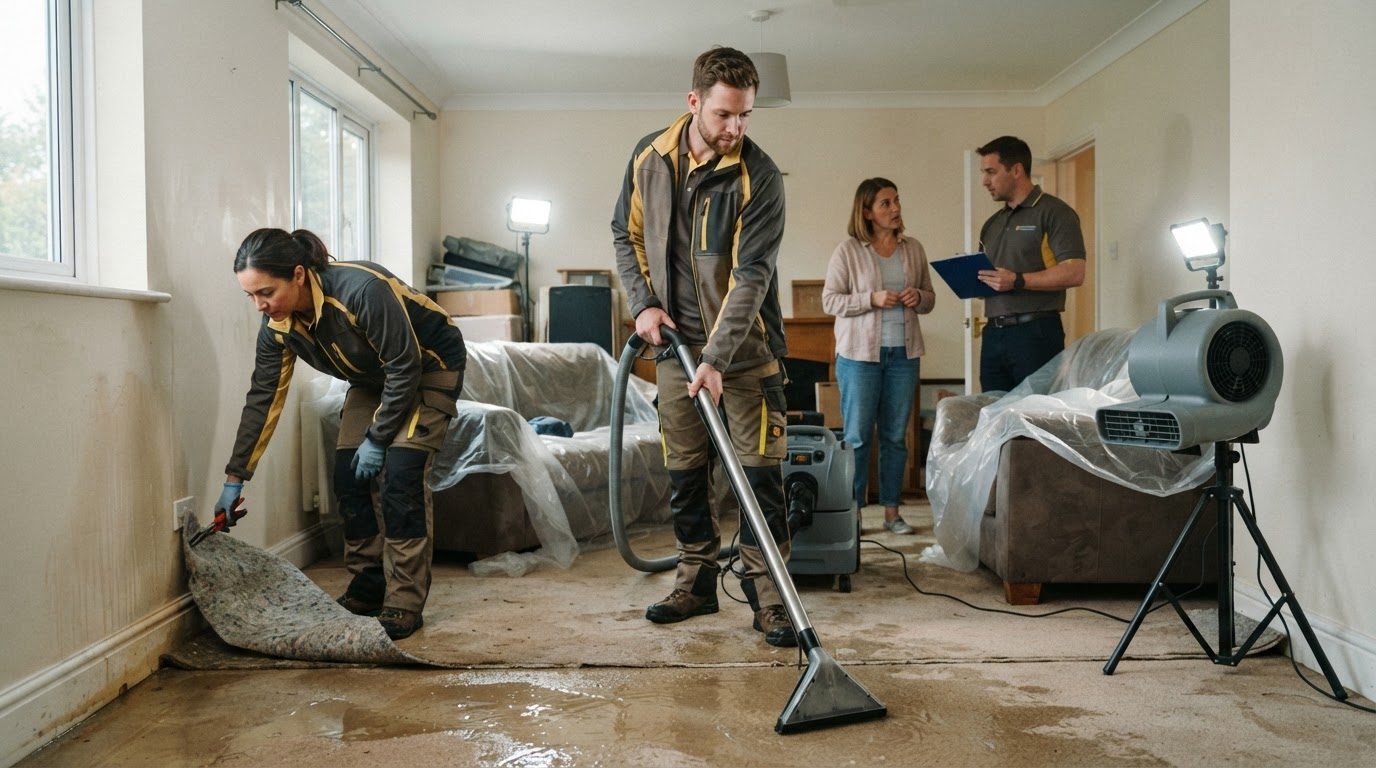
A burst pipe, failed water heater, or storm-driven roof leak can turn a dry Lafayette property into a damage-control project within minutes. The first response matters because water moves beneath flooring, behind walls, and into insulation long before the full extent is visible.
Emergency Water Damage Cleanup means more than removing puddles. It involves identifying the source, classifying contamination, extracting water, drying structural materials, and documenting conditions. Property owners seeking local assistance can review Emergency Water Damage Cleanup while arranging a safe response.
A professional assessment can prevent a manageable loss from becoming a reconstruction project. Restoration Logistics Lafayette is one local resource property owners may consider when flooding, hidden moisture, or contaminated water exceeds household capabilities.
What to Do in the First Minutes of a Water Emergency
Standing water should not simply be left to evaporate. It can wick into porous materials, swell wood-based products, damage subfloors, corrode metal, and create conditions for bacterial odors and mold. In warm, humid conditions common to south Louisiana, microbial growth can begin developing in roughly 24–48 hours when materials remain wet.
Use this immediate checklist:
- Stop the supply line, shut off an appliance, or address the source only if you can do so without entering hazardous water.
- Turn off electricity only from a dry, safe location. Never reach through water to operate a breaker.
- Keep away from water that may contain sewage, chemicals, floodwater, or energized electrical components.
- Move furniture, electronics, documents, and other undamaged contents to a dry area if doing so will not spread contamination.
- Photograph and video affected rooms, contents, visible water lines, and damaged materials before moving or discarding anything.
- Contact your insurer or agent and preserve receipts for emergency services, supplies, lodging, and temporary repairs.
Professional emergency cleanup is warranted for widespread flooding, ceiling or roof leaks, sewage backups, water entering electrical systems, suspected structural damage, or moisture concealed in walls, floors, ceilings, crawl spaces, and insulation. A household wet/dry vacuum is not a substitute for commercial extraction and structural drying, particularly when the water covers a large area.
How Emergency Water Cleanup Works From Extraction to Drying
A competent restoration workflow generally follows a documented sequence:
- Assessment and source control: Technicians inspect the origin, affected rooms, building materials, and potential safety hazards. Water is classified by contamination level, commonly ranging from clean supply water to significantly contaminated sewage or floodwater.
- Moisture mapping: Pin and non-invasive moisture meters, infrared cameras, and hygrometers help identify wet flooring, drywall, framing, ceilings, and concealed cavities. Thermal imaging indicates temperature differences; it does not independently prove moisture.
- Extraction: Portable extractors, truck-mounted units, submersible pumps, and specialized vacuums remove bulk water. Extraction is substantially different from mopping because it reduces moisture held inside carpet, pad, wood, and porous assemblies.
- Material removal: Saturated carpet pad, swollen particleboard, damaged drywall, insulation, and other unsalvageable materials may require controlled removal. Contents are separated into salvageable, questionable, and non-restorable categories.
- Structural drying: Commercial air movers increase evaporation while dehumidifiers remove vapor from the air. Technicians manage air exchange and humidity rather than merely pointing fans at wet surfaces.
- Verification: Moisture readings and relative-humidity measurements are repeated during the drying phase. Equipment should remain until affected materials approach documented dry standards comparable to unaffected areas.
Visible dryness is not proof of complete drying. Framing, subfloors, insulation, cabinet bases, and wall cavities may retain moisture after the surface feels normal.
Different areas require different tactics:
- Basements and crawl spaces: Technicians check foundation seepage, vapor movement, standing water, ductwork, insulation, and elevated humidity. Pumping may need to be staged when hydrostatic pressure threatens walls or slabs.
- Hardwood flooring: Rapid extraction can limit cupping and staining, but sanding or replacement may be necessary if boards, adhesives, or subflooring remain distorted.
- Drywall: Limited exposure may be dried in place if it remains structurally sound; swollen, delaminated, or contaminated sections often require removal.
- Carpet: Water extraction, pad removal, cleaning, and rapid drying are essential. Sewage-contaminated carpet and pad are generally not treated like clean-water losses.
Matching Cleanup Methods to the Source and Type of Water
The source determines both urgency and safety:
- Burst or frozen pipes: Stop the water, protect contents, and inspect adjacent walls, insulation, and subfloors. A concealed pinhole leak may create a much larger wet area than the visible break suggests.
- Appliance or water-heater leaks: Dishwashers, washing machines, refrigerators, and heaters can discharge substantial water quickly. Check cabinetry, flooring transitions, nearby electrical components, and lower wall sections.
- Roof and storm intrusion: Tarps or temporary coverings may limit further entry, but saturated attic insulation, ceilings, and wall assemblies still require drying. Lafayette’s intense thunderstorms and hurricane-related rainfall can produce multiple entry points.
- Toilet overflows or sewage backups: Treat these as contaminated-water events. Porous materials, contaminated contents, and affected building components may need removal, disposal, cleaning, and disinfection.
- Basement and foundation seepage: Address grading, gutters, downspouts, sump systems, cracks, and drainage pathways after immediate extraction. Cleanup alone will not solve recurring water intrusion.
Contaminated water requires appropriate personal protective equipment, containment, cleaning agents, disposal procedures, and worker safety practices. Sewage, floodwater, and suspected electrical hazards should not be handled as a do-it-yourself project. Restoration companies should follow applicable OSHA practices and use industry guidance such as the IICRC S500 standard for professional water damage restoration.
After extraction, technicians may clean, sanitize, deodorize, and restore contents. A pack-out can be useful when furniture, clothing, electronics, or documents need controlled cleaning away from the work zone. Inventory photographs, moisture documentation, and item-level decisions help distinguish salvageable belongings from materials that are unsafe or uneconomical to restore.
Preventing Secondary Damage After the Water Is Removed
Incomplete drying can produce musty odors, microbial growth, swelling, corrosion, delamination, and weakened structural materials. It can also cause damage to contents that appeared unaffected during the initial emergency.
During drying, monitoring should include:
- Moisture content in flooring, drywall, framing, and subfloors.
- Indoor temperature and relative humidity.
- Moisture changes in concealed or difficult-to-access assemblies.
- Daily or otherwise documented equipment and reading checks.
Follow-up is necessary when you notice:
- Persistent or newly developing odors.
- Bubbling paint, soft drywall, or peeling finishes.
- Buckled flooring or gaps between boards.
- Staining that returns after cleaning or painting.
- Condensation on windows, ducts, or cold surfaces.
- Indoor humidity that remains elevated despite ventilation or dehumidification.
Cleanup and reconstruction are separate but connected phases. Reconstruction may include drywall replacement, flooring repair, cabinet work, insulation removal, baseboard replacement, or framing repairs. Cutting into a wall or removing flooring should be based on moisture evidence, contamination, material condition, and the likelihood of drying in place—not appearance alone.
For an insurance claim, keep the original photographs, technician reports, moisture readings, equipment logs, invoices, receipts, item inventories, and records of removed materials. Do not discard major damaged components before documenting them and confirming requirements with the insurer, unless immediate safety or sanitation demands removal.
Emergency Water Damage Cleanup Questions Lafayette Property Owners Ask
How quickly should water damage be cleaned up?
Call as soon as possible, ideally during the first few hours. Early extraction can reduce absorption, improve salvageability, and limit demolition. Delays increase the chance of warped flooring, damaged subfloors, odors, and mold-related work.
How much does emergency water remediation cost?
A small clean-water extraction may cost several hundred dollars, while broader mitigation commonly ranges from roughly $1,300 to $5,200. Severe flooding or contaminated losses can cost substantially more. Key variables include water category, affected square footage, extraction volume, materials removed, drying duration, contents handling, and reconstruction.
How long does water damage cleanup take?
Extraction may take a few hours, but structural drying commonly requires several days. Cleaning, contents restoration, insurance coordination, and reconstruction can extend the project to weeks when flooring, drywall, cabinetry, or framing must be repaired.
Can water damage cause mold?
Yes. Trapped moisture, warm temperatures, organic building materials, and inadequate drying create favorable conditions. Mold risk is not determined by a single clock, but the 24–48-hour period is a practical reason to begin extraction and moisture control immediately.
Can I clean up a large amount of water myself?
Only minor, clean-water spills may be reasonable for a careful homeowner. Household fans and vacuums cannot reliably dry wall cavities, insulation, subfloors, or framing. Electricity, sewage, floodwater, structural instability, and extensive standing water call for trained professionals.
Will insurance cover the cleanup?
Coverage depends on the source of loss, exclusions, deductibles, endorsements, and policy language. Sudden pipe failures may be treated differently from long-term seepage, maintenance issues, or flood damage. Prompt notification and thorough restoration documentation can help support the claim, but the insurer—not the cleanup contractor—determines coverage.
